
A potential US-Iran peace deal, expected to be signed on June 19, is anticipated to ease geopolitical stress and benefit various sectors, particularly in India, with analysts suggesting investors await finer details before making significant moves.
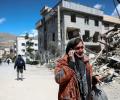
Fleur Hassan-Nahoum, special envoy, foreign ministry of Israel, has asserted that the situation has effectively been a "multi-front regional conflict" since its inception, while claiming significant military and strategic gains against adversarial forces.

The successful hosting of the 18th BRICS summit in New Delhi has provided a significant boost to the BJP, offering a timely opportunity to strengthen its narrative against the opposition ahead of crucial assembly elections next year. BJP sources highlight the BRICS grouping's strong condemnation of the Pahalgam terror attack and the consensus declaration as major diplomatic victories for the Modi government, countering criticisms of its foreign policy. The party plans to leverage these outcomes during its month-long Seva Sankalp campaign to connect with various sections of society.

Russia has expressed strong concern over a US-Israeli strike on the Iranian port of Bandar Anzali, a key transit hub on the INSTC, warning of the risk of drawing Caspian states into the ongoing conflict.

Trump claimed on social media that recent US-Iran discussions were 'very good and productive' and aimed at a 'complete and total resolution' of the conflict.

Fitch Ratings has affirmed India's sovereign credit rating at 'BBB-' with a stable outlook, acknowledging robust growth prospects and strong external finances. However, the agency highlighted concerns over elevated government debt, lagging structural metrics, and potential fiscal spending pressures due to rising youth unemployment.

US President Donald Trump announced the 'reinstatement' of an 'Iranian Blockade' in the Strait of Hormuz, stating the US would charge a 20 per cent levy on transiting cargo for providing security, while Iran warned against any US interference, reaffirming its authority over the critical waterway.

Prime Minister Narendra Modi cautioned against the 'weaponisation' of technology and critical minerals at the BRICS summit, advocating for cooperation to foster shared prosperity. Concurrently, Chinese President Xi Jinping announced plans for an open-source AI ecosystem for BRICS nations, positioning Beijing as a key technology partner amid global AI competition.

China's Foreign Ministry has refuted allegations of providing military support to Iran, warning the US against imposing tariffs based on these accusations. The statement follows reports of Iran acquiring a Chinese satellite for targeting US military bases. Meanwhile, a rescheduled meeting between Presidents Trump and Xi Jinping is set for May.

Prime Minister Narendra Modi has highlighted the risks posed by the 'weaponisation' of resources and strategic sea routes, urging India to achieve greater self-reliance in energy to mitigate vulnerabilities to overseas supplies and geopolitical tensions.

US Secretary of State Marco Rubio said that discussions aimed at halting the conflict with Iran have shown "some slight progress," while simultaneously echoing Washington's dissatisfaction with its NATO allies.

A new analysis by the Institute for the Study of War has warned that Iran could escalate its attacks on Israel by launching large missile salvos aimed at maximising psychological pressure on civilians.

As Iran heads into crucial peace talks with the United States of America, here are the six men who decide the Islamic Republic's course.

Indian benchmark indices, Sensex and Nifty, closed sharply higher, with the Sensex climbing 1,695.40 points and the Nifty surging nearly 2 per cent, driven by a global market rally and a decline in crude oil prices following US President Donald Trump's declaration that his country has ended the war with Iran.
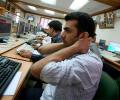
Indian stock market benchmark indices, Sensex and Nifty, experienced declines in early trade due to escalating tensions between the US and Iran, which led to a surge in crude oil prices and weak global equity trends.

'India was the emirate's largest international source market by hotel guest volume.'

Amid ongoing tensions with the US, Iran's IRGC Navy has issued new directives restricting maritime movement through the Strait of Hormuz, allowing only civilian vessels on Iranian-designated routes and barring all military ships.

FIFA president Gianni Infantino confirms Iran will participate in the 2026 World Cup despite geopolitical tensions, urging that sport remain separate from politics.

Iran on Monday formally rejected a US-proposed ceasefire deal amid the escalating conflict in West Asia, instead unveiling its own 10-point plan aimed at permanently ending the ongoing war, as reported by the Iranian state news agency Islamic Republic News Agency (IRNA).

An Indian crew member was killed and six other Indian nationals were among eight injured when Iranian cruise missiles struck two UAE tankers, Mombasa and Al Bahiyah, in the Strait of Hormuz, escalating regional tensions and drawing strong condemnation from the UAE.

Pakistan's Foreign Office has refuted media reports suggesting that its efforts to facilitate peace talks between the US and Iran have stalled, calling the reports baseless and speculative.

Iran has blamed the US for disruptions in oil and gas shipping through the Strait of Hormuz, citing 'destabilising actions' as the cause amid the ongoing West Asia conflict and rising energy prices.

Iran is fighting a different war: Older, slower, and in some ways more dangerous. Iran doesn't need to shoot down an F/A-18. It only needs to make the Strait of Hormuz feel dangerous long enough for insurance markets, shipping companies, and oil futures traders to do the rest. Prem Panicker continues his must-read daily blog on the war in the Middle East.
The Indian rupee is highly vulnerable among Asian currencies, with Barclays and MUFG warning of a potential depreciation towards 100/$ if the West Asia conflict persists, driven by widening current account deficits and elevated crude oil prices.

Tensions in West Asia have dramatically escalated as Israel launched targeted military operations against Iran, triggering widespread blasts across strategic cities, following earlier Iranian projectile attacks on Israel.
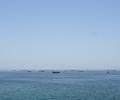
China has called on Iran to reopen the Strait of Hormuz and expressed appreciation for Tehran's commitment not to develop nuclear weapons, a key demand of the US to end the conflict.

Pezeshkian urged American citizens to look beyond 'manufactured narratives', claiming the portrayal of Iran as a threat is driven by the military-industrial complex and Israeli political interests.

Pakistan's Chief of Defence Forces Field Marshal Asim Munir held talks with Iranian leaders in Tehran to help resolve the conflict between the US and Iran, following a recent ceasefire agreement.

Amid the ongoing conflict in West Asia, Israeli Ambassador to India, Reuven Azar, stated that Israel is willing to cease hostilities if Iran changes its course, emphasising that Tel Aviv has consulted diplomatic channels, including the US and regional partners.

Speaking to reporters aboard Air Force One, Trump said the US prefers a negotiated settlement and expects cooperation from Iran on securing nuclear-related materials.

Iran blames the US for 'maximalism' and 'shifting goalposts' leading to the collapse of the Islamabad talks.

In a significant diplomatic manoeuvre aimed at de-escalating regional tensions, Iran has reportedly submitted a "new proposal" to the United States through Pakistani intermediaries.

The Indian rupee depreciated by 32 paise to close at 92.83 against the US dollar, influenced by escalating global tensions, particularly the US-Iran conflict, and the deadline for the RBI's instructions to banks to curb overnight positions.

J D Vance heads to Islamabad for high-stakes US-Iran talks, balancing cautious optimism with a warning against bad faith. negotiations.
Iran has announced the Strait of Hormuz is open to commercial vessels, coinciding with a ceasefire between Lebanon and Israel.
Pakistan has intensified its efforts to bring the US and Iran back to the negotiating table to end the war in West Asia, following President Trump's extension of the ceasefire. Pakistani officials have engaged with Iranian, Turkish, and British counterparts to promote dialogue and diplomacy for a peaceful resolution.

Amid escalating tensions, Iranian Deputy Foreign Minister Saeed Khatibzadeh declares Iran's unwavering commitment to a 'heroic nationalist defence' against perceived American and Israeli aggression, vowing to resist what he calls an 'invasion' to the very end.

In his resignation letter to US President Donald Trump, Kent called the conflict with Iran unjustified, contending that Washington, DC entered the war due primarily to pressure from Israel and its powerful American lobby rather than clear, direct threats to national security.

Rice exporters in Haryana are facing potential payment delays and shipment disruptions to Iran and Afghanistan following recent military strikes on Iran.

China has criticised the US blockade of the Strait of Hormuz, calling it a dangerous and irresponsible move, and urged Washington and Tehran to honour the ceasefire. Beijing also denied aiding Iran militarily and threatened countermeasures if the US imposes tariffs.
